Pin Up E-Wallet Deposits: Skrill, Neteller, Payz
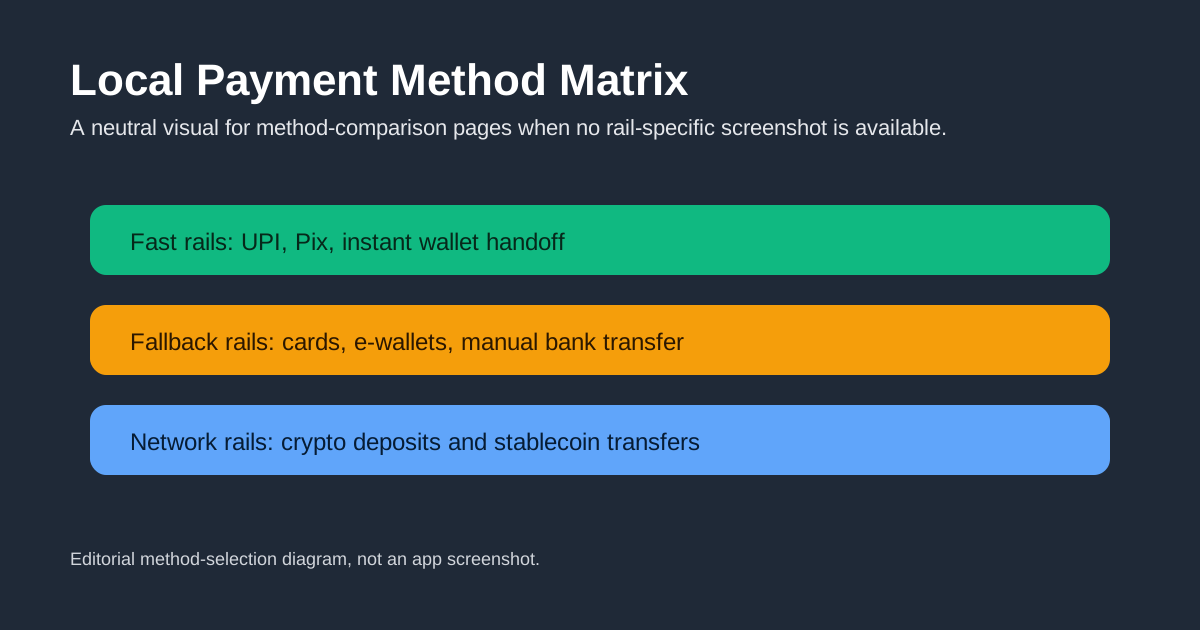 E-wallet context: e-wallets belong in the fallback-method comparison, not the crypto network screen.

Marcus ColeMost expensive deposit method by a wide margin | April 2026
Skrill, Neteller and Payz are accepted at Pin Up. They are the most expensive deposit method by a wide margin once you factor in the wallet funding step. I do not generally recommend them unless you already have a funded e-wallet from another site — the wallet-to-casino step itself is fine, but getting money into the wallet in the first place costs 1-4% in funding fees, plus another 1.99-4.99% in FX markup when the funds convert to Pin Up's account currency. Combined real cost can hit 5-7% of the deposited amount. Compare that to UPI (zero) or Pix (zero) or USDT TRC20 ($1.10 flat).
E-Wallet Quick Facts
Minimum $10, Maximum $5,000
Pin Up sets the e-wallet minimum at $10 and maximum at $5,000 per transaction. These caps apply to all three supported wallets: Skrill, Neteller, Payz. Daily totals can go higher if you stack multiple transactions.
ETA — Under 2 Minutes
The Pin Up side of the flow is fast — 90 seconds average from the moment you approve in the wallet popup to the balance update in the cashier. This is the fastest "non-instant" method after UPI and Pix. Crypto is faster than e-wallets for TRC20 but slower for BTC.
Fees — Zero from PinUp, Wallet Fees Vary
Pin Up charges zero for e-wallet deposits. The wallet providers charge their own fees for two things: funding the wallet in the first place (if it is not already funded) and FX markup when converting currency. Skrill charges 1.99% FX markup on EUR/USD conversions, 4.99% on exotic pair conversions. Neteller is identical. Payz is slightly higher at 2.99% standard markup.
Skrill Deposit — Step by Step
Funding Your Skrill Wallet First
If your Skrill wallet is not already funded, step zero is to add money to it. Skrill lets you fund via bank transfer (free but slow, 1-3 days) or card (1-4% fee immediately). Most users fund with a card because the speed matters. On a $100 Skrill fund via Visa, expect roughly $3 in funding fees. This is a pre-existing cost before you even touch Pin Up's cashier.
The PinUp Skrill Flow
- Open the Pin Up cashier. Pick Skrill as the method, enter the amount, tap Continue.
- Log into Skrill in the popup. A new browser window opens with Skrill's login page. Enter your Skrill email and password. If you have 2FA enabled, authenticate.
- Approve the transfer. Skrill displays the transfer details — amount, merchant (Pin Up), fee preview. Approve.
- Balance updates. Within 90 seconds on average, the Pin Up balance updates.
Neteller Deposit — Step by Step
Neteller is owned by the same parent company as Skrill (Paysafe). The flow is identical — Pin Up cashier, Neteller popup, login, approve, balance updates. Fees are identical. If you have a choice between Skrill and Neteller, the only meaningful difference is which one you already have a funded wallet for.
Payz Deposit (Formerly ecoPayz) — Step by Step
Payz (rebranded from ecoPayz in 2023) has a similar flow with a slightly different UI. Fees are slightly higher — 2.99% FX markup standard versus 1.99% on Skrill/Neteller. Popular in specific regions (Eastern Europe, Africa) where Skrill/Neteller are less available.
The Hidden Fees People Miss
Top-Up Fees to Fund Skrill/Neteller
If your Skrill wallet is empty and you need to fund it with a card, the card-to-Skrill step itself charges 1-4%. This is before you even touch the Pin Up cashier. On a $100 target deposit to Pin Up, you pay $3-4 to get $100 into Skrill, then more fees on the Skrill-to-Pin Up step.
FX Markup (1.99% to 4.99%)
When Skrill moves funds to Pin Up, it converts your wallet currency (typically the local currency you funded in) to the Pin Up account currency (EUR or USD). Skrill's published FX markup is 1.99% on major pairs, up to 4.99% on exotic pairs. On a $100 transfer that is $1.99-$4.99 of spread cost. Not disclosed as a "fee" on the transfer preview — hidden in the rate.
Inactivity Fees
Skrill charges a $5/month inactivity fee after 12 months of no activity. If you fund a wallet for a one-time Pin Up deposit and forget about it, Skrill slowly drains the balance over time. Always withdraw or use the wallet if you fund it.
When E-Wallets Actually Make Sense
You Already Have Funds in the Wallet
If your Skrill or Neteller wallet is already funded from other online activity, moving those funds to Pin Up via the direct wallet flow is cheap — you skip the funding step and only pay the 1.99% FX markup. On a $100 deposit that is $1.99 of cost, which is comparable to USDT TRC20's $1.10 and beats a card deposit's 2.12% spread. Reasonable use case.
Your Card Is Blocked and You Don't Want Crypto
If your card is declining and you do not want to deal with crypto wallets or exchanges, e-wallets are a fiat-denominated middleman option. Slower and more expensive than ideal, but workable.
You Need an Intermediary for Multi-Site Play
If you play on multiple sites and want a consolidated bankroll, Skrill or Neteller act as a central hub. Move funds between sites without repeatedly touching your bank. This is the original use case for the major e-wallet networks in iGaming.
When to Skip E-Wallets
Skip e-wallets if you are in India (UPI is free, instant, and works on every modern Indian bank). Skip if you are in Brazil (Pix is free, 12 seconds, regulated). Skip if you are comfortable with crypto and already hold USDT TRC20 ($1.10 flat, 45 seconds). Skip if you are doing a one-time deposit and do not already have a funded e-wallet (the funding step makes this the slowest method). E-wallets only make sense in a narrow set of conditions — mostly, they are a legacy of a pre-UPI, pre-Pix world where Skrill and Neteller were the cross-border cashier of choice for iGaming.
For the cheaper alternatives, see UPI, Pix, crypto. For a full fees deep dive, see deposit fees.
Marcus Cole
Marcus Cole is a sports betting analyst with eight years of experience and a background as a former bookmaker.
Reviewed by Sarah Mitchell — Senior Editor
