Responsible Gambling: Set Limits Before You Fund

Marcus Cole8 years payment analyst, ex-bookmaker
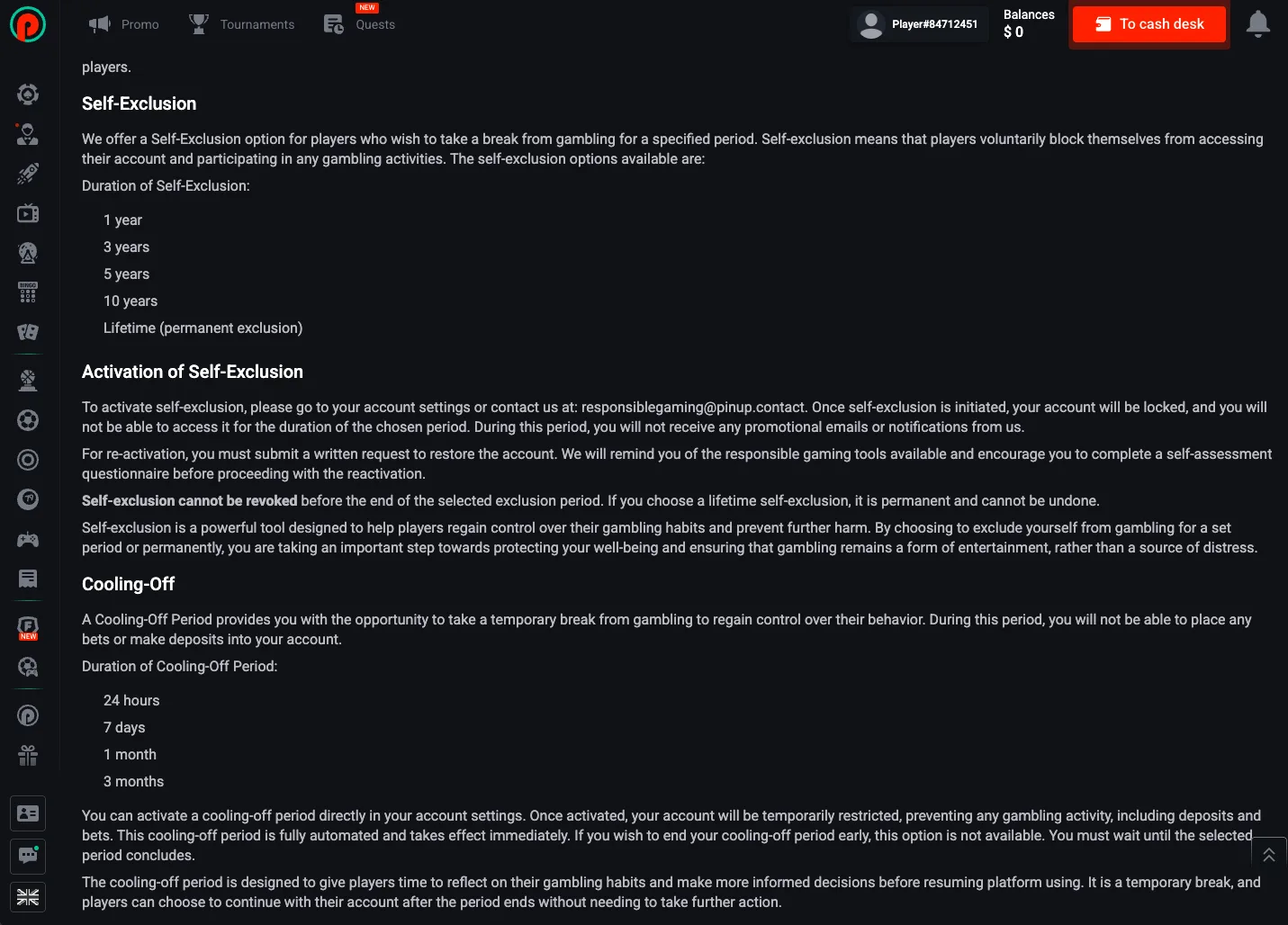 Account-control proof: deposit advice should point to actual controls, and this screen is the practical destination for the cooling-off and self-exclusion steps the page recommends.
I worked as a bookmaker for six years before I switched to writing about it. The thing nobody told me when I was on the operator side: most chronic gambling problems start at the deposit step. Someone funds an account they shouldn't have funded, then chases losses to make it back, then funds again. Setting a hard cap on deposits is the single most effective intervention if you want to keep gambling as entertainment instead of a problem. This page is about how to set those caps and where to get help if you've already lost the rhythm.
Why Deposit Pages Need a Serious RG Layer
A deposit-focused site attracts readers at the most dangerous moment in the whole gambling funnel: right before money moves from the real world into the operator wallet. That is exactly when a lot of bad sessions become possible. If someone is already stressed, behind on bills, or telling themselves that one clean deposit will fix a previous loss, then the payment method itself becomes part of the problem. A safer-play page on a deposit site should therefore do more than repeat “gamble responsibly.” It should slow the reader down before they fund.
My blunt version is this: if you are reading a deposit guide while under pressure to recover money, you should not deposit. UPI being instant, Pix being frictionless, or crypto being available 24/7 are not reasons to continue. They are reasons to install stronger limits before you touch the cashier again.
Set a Deposit Limit Before Your First Deposit
Pin Up's deposit limit is a server-side cap. Once set, you can't bypass it by uninstalling the app, switching devices, or contacting support. Increases take a 24-hour cooling-off period. Decreases take effect immediately. That asymmetry is intentional — it gives you a brake when you need one.
To set a deposit limit on Pin Up:
- Open the Pin Up app or mobile site
- Profile → Responsible Gambling → Deposit Limits
- Choose Daily, Weekly, or Monthly
- Enter the amount you'd be okay losing entirely as entertainment cost
- Confirm
The amount you pick should be money you'd spend on a night out or a streaming subscription — not money you need for rent, food, or savings. If you don't have entertainment money to spare this month, the right limit is zero. Skip the deposit entirely.
Practical Funding Rules I Recommend
If you still want to play occasionally and keep it healthy, set a structure before you fund:
- One method only. Don't keep cards, UPI, Pix, and crypto all available at once. Fewer active rails mean less impulsive reloading.
- One wallet for gambling only. Use a dedicated balance that is separate from rent, salary, and savings money.
- No redeposits on the same day. If the first deposit is gone, the session is over. This one rule prevents a huge amount of damage.
- No borrowing to fund. If the deposit requires a credit card, loan app, or borrowed money, the answer is already no.
- Use the slowest safe method if speed is the problem. Sometimes a little friction is healthy.
Those rules are intentionally simple. Good safer-play systems are boring. They work because they remove room for negotiation in the middle of an emotional decision.
Loss Limits and Session Time Limits
Two more tools sit in the same menu. Loss limits cap your net losses (deposits minus withdrawals) over a window. When you hit the cap, the app blocks new bets until the window resets. Session time limits log you out after a chosen duration and require a cooling-off period before you can log back in — useful for breaking the "just one more spin" loop.
I personally recommend setting all three at once: a deposit limit you'd never need to hit, a loss limit at 75% of your deposit limit, and a session time limit of 60 minutes. That triple cap catches most problematic patterns before they escalate.
What to do before any new deposit if you feel pressure
If you are about to deposit because you feel urgency, stop and run a 60-second check. Ask three questions: do I need this money elsewhere, am I trying to fix a previous session, and would I still deposit if nobody promised me a bonus or quick recovery? If any answer feels uncomfortable, pause the funding flow. Deposit pages are dangerous precisely because they sit at the point where emotion turns into action.
The best habit is to separate research from funding. Read method guides when calm. Deposit only after the decision is already made and already budgeted. If you use payment research to persuade yourself into another session, the content has become part of the chase. That is the moment to step away, not optimize the payment route.
Self-Exclusion Options
If you want to lock yourself out of the account temporarily or permanently, Pin Up offers cool-off periods of 24 hours, 7 days, 1 month, 6 months, and permanent self-exclusion. Once active, support cannot reverse the cool-off until the period ends. Permanent self-exclusion is final.
Warning Signs to Watch For
- Depositing more than you planned
- Chasing losses with bigger bets
- Borrowing money or selling things to deposit again
- Lying to family or friends about how much you've deposited
- Feeling anxious or irritable when you can't access the app
- Trying to stop and being unable to
If any of these resonate, talk to one of the helplines below. They're free and confidential. The counselors aren't going to lecture you — they'll just listen and help you map a way forward.
Deposit-Specific Warning Signs
- You switch payment methods because one method hit its limit and you want to keep going.
- You top up in smaller amounts to make the total spend feel less serious.
- You keep a gambling app linked to your main salary card for convenience.
- You make a deposit immediately after a withdrawal request fails or is delayed.
- You tell yourself the next deposit is “just to unlock the win that is coming”.
Those are all signs that the payment flow is no longer neutral. It has become a trigger. At that point the right move is not a better method guide. It is a pause.
International Helplines
Regional Helplines
India
- iCall — +91 9152987821 | icallhelpline.org
- AASRA — +91 9820466726 (broader emotional support)
Brazil
This Page Exists Because the Industry Needs It
Half the affiliate sites in this niche pretend deposit problems don't exist. They're optimizing for conversion, not for player welfare. I'm trying to do something different. If you found this page because you're worried about your own deposit habits, the right move is to set a hard limit during reviewed sessions and call one of the helplines listed above. The deposit guides on this site will still be here when you come back — or they won't be needed at all, which is also fine.
The best deposit you will ever make is the one you decide not to make because the timing is wrong. That decision does not show up in an affiliate dashboard, but it is still the right one.
